


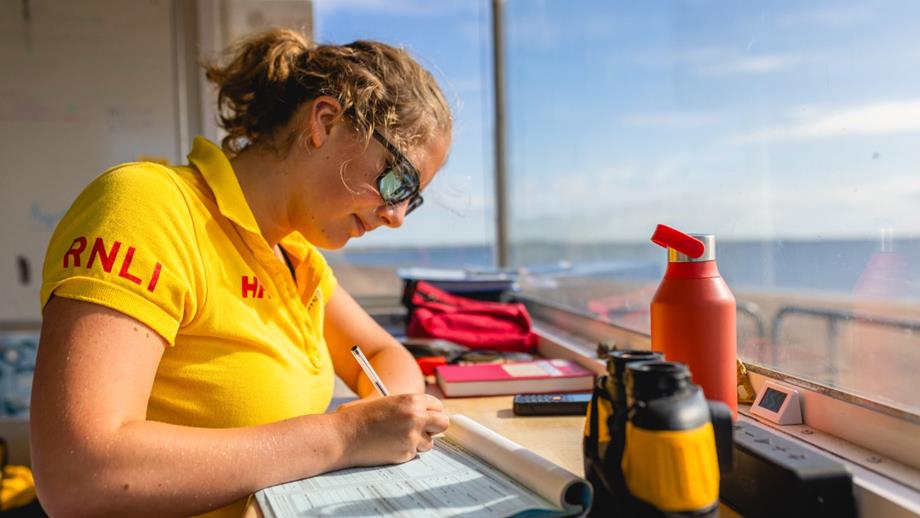

Find out some of the many benefits you gain when you decide to become an RNLI beach lifeguard saving lives on the beach.
Explore the benefits
 Donate now
Thinking about becoming a lifeguard and wondering what training is involved? Here you’ll learn more about the training RNLI lifeguards get, from casualty care to learning how to use specialist rescue equipment.

RNLI lifeguards need to be ready to face any scenario on the beach, from surfers caught in rip currents to a child needing first aid. That means they need in-depth, specialist training. This training gives them the skills they need to spot dangers and prevent accidents before they happen – and respond instantly if they occur.
As well as meeting health requirements and undertaking rigorous fitness tests, RNLI lifeguards receive training in a variety of areas. This includes casualty care training, learning how to operate rescue equipment and taking part in staged rescue scenarios. For lifeguards looking to progress to more senior positions, there are also further training opportunities for professional development.
Most of their training happens on the beach, but some also takes place at the RNLI College in Poole, Dorset – the home of RNLI training.
At the start of the lifeguard season each year, RNLI lifeguards old and new will take part in a 2-week induction. The induction covers seven key areas, which provides lifeguards with everything they need to keep people safe and save lives.
For returning lifeguards, it’s a chance to refamiliarise themselves with what they’ve learned before – ensuring their knowledge is as up to date as possible before the new season starts.
For new lifeguards, the induction is a chance to learn a variety of new skills so they’re ready to hit the ground running in their first season. It’s also a great opportunity to meet other new lifeguards and build team bonds.
The induction involves a mix of theoretical and practical training, helping them learn vital skills that they can put into practice.
When someone falls ill, hurts themselves or becomes unresponsive, our lifeguards need to be able to stay calm and respond fast. Their training provides them with the skills they need to manage all kinds of real-life emergencies – both in the water and on the sand.
As part of their induction, all lifeguards undertake a Casualty Care course: Casualty Care for Lifeguards (CC4LG). This course teaches them about various injuries and illnesses that they might face while working on the beach, which involves learning how to give CPR and use first aid equipment.
To put their learning into practice, lifeguards take part in a series of staged rescue scenarios. As well as using their casualty care skills, this is a great opportunity for them to practise using lifeguard kit and equipment.
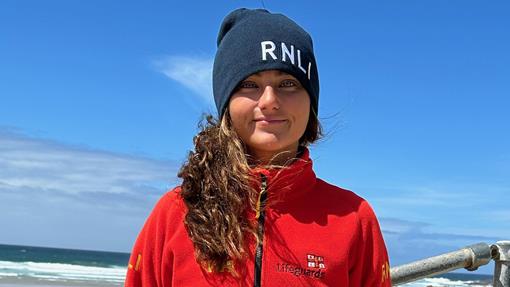
The casualty care training is critical for the role. We get to practise what we've learned so that we're ready to face any situation.
This training helps prepare lifeguards for intense and potentially life-threatening situations – such as when someone becomes unresponsive in the water – so that they’re ready to take action if it happens for real.
Lifeguards will continue this kind of training beyond their induction too, helping them feel confident and able to face any scenario at the beach.
Watch this video of a lifeguard in training to get a glimpse of what these staged rescue scenarios involve.
To help people stay safe at the beach, RNLI lifeguards use a variety of specialist kit and equipment (dependent on the geography of the beach and the resource available/needed). From inshore rescue boats (IRBs) to reach casualties in the surf, to patrol vehicles to keep watch by the water’s edge, their training teaches them how to use this kit safely and effectively.
The patrol vehicle is incredibly versatile, with four-wheel drive that comes in handy when driving across sandy beaches. It can be used for lifeguard patrols, public safety announcements, launch and recovery of other lifeguard kit, or as a base for lifeguards to work from close to the shore.
Through their training, RNLI lifeguards learn how to drive the patrol vehicle safely on the beach and in confined areas, recognise potential risks and hazards, and recover the vehicle if it becomes stuck or ‘bogged in’.
The all-terrain vehicle (ATV), commonly known as a quad bike, offers great manoeuvrability and all-round visibility – making it ideal for use on busy beaches.
Lifeguards learn how to use ATVs safely, including the necessary pre-operational safety checks and gaining experience in driving the vehicle on different terrains. They also learn how to use the trailer, which can be attached to the back of the ATV to transport equipment.
The inshore rescue boat is an inflatable boat designed to help lifeguards reach people in trouble in the surf – and fast.
They are sturdy enough for use in heavy surf conditions, yet light enough for two lifeguards to launch it from the shore.
Our IRB training courses – Inshore Rescue Boat Crew and Inshore Rescue Boat Helm – provide lifeguards with the skills and knowledge required to safely operate the IRB in surf conditions. This includes learning how to launch and recover the IRB, and how to manoeuvre it in choppy sea conditions.
Many lifeguarded beaches have a rescue watercraft (RWC). They are fast and agile which, in the hands of a well-trained rider, are ideal for reaching casualties in even the trickiest of conditions. They can move across big stretches of water quickly – going from 0 to 30mph in 2.4 seconds.
To learn how to operate an RWC safely and effectively, lifeguards will do approximately 40 hours of training. The Rescue Watercraft Operator course covers a wide range of areas, from practising steering and keeping the RWC under control in very large surf, to learning how to use its detachable foam rescue sled.
For complex or hazardous rescues, sometimes lifeguards will work with lifeboat crews and the Air Ambulance service to reach people in serious trouble at sea.
This means lifeguards will take part in joint training exercises with the lifeboat crew, helping to prepare them for multi-agency rescues.For example, lifeguards can help give someone CPR while a paramedic focuses on more advanced medical treatment.
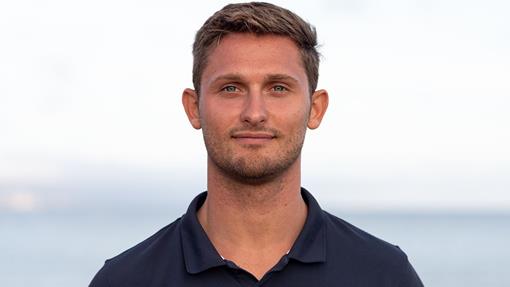
It's good to work closely with them so they know what we are capable of and how they can utilise us
For current RNLI lifeguards looking to progress their lifeguarding career, we provide three courses suited to different skills and interests. Two of our courses provide lifeguards with the management skills they need for more senior positions, such as senior lifeguard and lifeguard supervisor. We also offer a course where lifeguards can learn how to train and assess other lifeguards.
The Operational Leadership course helps lifeguards take the next step to become a senior lifeguard. It provides them with the additional skills and knowledge they need to carry out leadership tasks required of the role.
Senior lifeguards supervise the running of a beach lifeguard unit and are responsible for leading teams of lifeguards. They also take the lead in providing a coordinated rescue response in emergency situations.
They also must be able to deal with conflict among members of the public and act on low level personnel issues with their teams.
This course also teaches lifeguards how to manage important paperwork, such as ensuring daily logs, written reports and incident logs are maintained correctly.
The Operational Administration course is for those looking to progress even further to a lifeguard supervisor role, which involves assisting lead lifeguard supervisors in the running of a beach lifeguard unit.
This course involves learning how to maintain stock levels of operational equipment, as well as how to set up, monitor and close down the lifeguard facilities and equipment.
Lifeguard supervisors also help promote beach safety campaigns and assist with the recruitment, induction and training of new lifeguards. This course provides them with the necessary skills they need to fulfil these parts of the role.
RNLI lifeguards patrol busy beaches and must be able to operate a variety of equipment in emergency situations. That means it’s essential that we have highly skilled trainers.
Our Trainer/Assessor course teaches lifeguards how to confidently deliver training that caters for a variety of different learning styles.


If you are heading to the coast, choose a lifeguarded beach. Find the nearest one you so you can stay safe and have fun at the coast this summer.