

As world sea levels rise and extreme weather becomes more common, countries and communities need to become more resilient to floods.
learn more
 Donate now

In countries like Bangladesh, where a growing middle class is boosting domestic tourism, the need for beach lifeguard services is increasing.
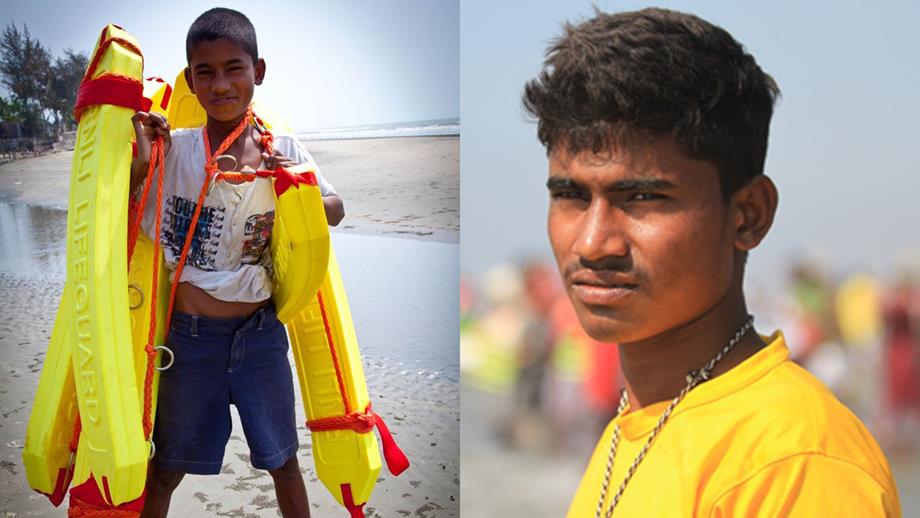
We’ve been working with SeaSafe, a CIPRB initiative in Bangladesh, since 2012 to build a lifeguarding and community safety service for Cox’s Bazar.
SeaSafe has grown from part-time voluntary patrols to full-time lifeguard patrols on the three busiest beaches in Cox's Bazar, school education visits, and SwimSafe lessons to teach children swim survival skills.
Since SeaSafe began, no-one has drowned in the patrolled areas when lifeguards have been on duty. Learn more about this incredible lifesaving community in our Bangladesh section.
For local children, who use the beach as a place to meet and play, watchful lifeguards and water safety education can protect them before they even get into danger.
The lifeguarding intervention helps teams with every aspect of putting a patrol in place, including beach profiling, rescue equipment, recruitment and fundraising.
It’s been developed over several years, tested and refined with growing lifeguard services in Bangladesh, The Gambia, Kenya, Philippines and Senegal. As more decision-makers see that a professional lifeguard service can protect communities and boost tourist economies alike, we hope that more areas can benefit from the resources we’ve developed.
One lifeguard who’s seen this evolution is Selim, who started out as a 9-year-old helping to carry the rescue tubes for training sessions, while his older sister Nasima trained to become a lifeguard. At the end of the training week, lifeguards were amazed when he recited word-for word everything he’d watch them learn. Some years later, he went on to become a volunteer lifeguard himself.

Guardian article
Download PDF - 3.95MB
Download PDF - 5.19MB


The Creches for Bangladesh appeal is helping to keep children safe!