


Rescue
 Donate now

Imagine this: you’re in the lifeboat, on your way to rescue someone in distress. The rain is lashing down and the wind is fierce …
It’s loud, so communicating with your fellow crew members is challenging. Time is crucial in situations like these, so you’re doing everything possible to act quickly, efficiently and - most importantly - safely.
Now imagine it’s also pitch-black.
This is a situation that our crews face regularly. As we move into autumn, the longer nights will mean more shouts in the dark. Saving lives always comes with challenges, but thankfully technology is here to help when conditions are working against us.
It’s been an exciting time for the RNLI on that front, as we’ve been rolling out some fantastic new tech across our lifeboats that has already shown promising results in trials. If you want a sneak peek at some of the kit that’s helping our crews save lives in impossible conditions, read on!
Before we get into all the new tech, it’s important to first understand the type of equipment crews use to save lives in the dark.
They have various tools at their disposal to search and navigate, such as radar, which can be used to home in on search and rescue transponders. It’s also used to monitor the lifeboat’s position and mitigate the risk of collision with other vessels.
The onboard navigation system helps crew plot their course and can be used to overlay a search pattern onto an electronic chart.
An echo sounder shows crews how much water they have underneath them, so they don’t accidentally ground the lifeboat.
Searchlights and torches help to find and highlight casualties and, in 2025, we rolled out new searchlights across the all-weather lifeboat (ALB) and inshore lifeboat (ILB) fleets. The updated searchlights are much more powerful, greatly enhancing our search and rescue capability in the dark.
We are currently trialling two exciting new bits of tech that are already being hailed as ‘gamechangers’, helping ensure our lifeboats are future-fit and able to meet changing coastal demand.
Teledyne FLIR Marine’s thermal imaging technology is being added as a fixed camera on top of ALBs, with the handheld version being used on ILBs. It will allow crews to detect vessels and people in the water more easily, even in complete darkness or fog.
The boat-mounted PTZ (pan tilt zoom, referring to the camera’s full range of motion) FLIR (forward-looking infrared) M364C LR camera and handheld thermal Ocean Scout Pro cameras have been used during both training exercises and on service, with positive feedback coming from the crews.
Dr Tom Coe, RNLI Senior Engineer, is hailing the new thermal cameras as a ‘gamechanger – not just at night, but also during the day.’ He explains that the cameras can be used even in bright sunshine. ‘If you’re looking for a climber on the cliffs, they’ll show up.’
He adds that the cameras are also incredibly simple to use, even if you haven’t had much practice, which is exactly what crews working in cold, dark conditions need.
The new cameras are being rolled out as part of an ongoing partnership with Teledyne Raymarine and its sister company, Teledyne FLIR Marine. According to Dr Coe, one of the big benefits of this partnership is that we’re able to get the tech onto the boats and get feedback from the crews using it within weeks.
The trials are going well so far, with the crew in Chiswick successfully using the thermal camera during training exercises that involve searching for a hot water bottle attached to a rescue dummy. You can see their training footage here:
Perhaps most significantly, the thermal imaging camera recently helped the lifeboat crew in Blackpool with a rescue. Sometimes a searchlight and the naked eye aren’t enough to spot a casualty in the dark and, on this occasion, the FLIR camera quickly and effectively detected the person, who was swiftly rescued. Reflecting on the rescue, crew members have commented on just how valuable the FLIR camera is in situations like this.
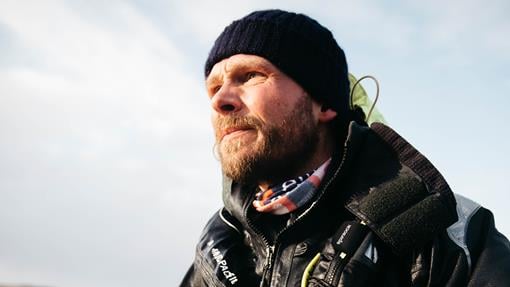
It’s easy to use, can be used day and night, and it’s already helped our crew rescue someone. That’s what makes it worth it
Teledyne Raymarine is also replacing the entire SIMS system, adding new radar, touch screens and enhanced navigational capabilities. It's being rolled out across Shannon class lifeboats and the Atlantic 85 mk4 later this year, with the rest of the fleet following in a phased approach. All lifeboats are expected to be refit by autumn 2029.
The refitted electronic bridge system will allow lifeboat crews to monitor, operate, and control functions such as navigation, radio communications, and engine management – all from their seats!
The system features high-resolution HydroTough touchscreens for enhanced navigation, as well as upgraded Cyclone Pro 4ft Marine Radar for precise identification of radar targets of interest.
Teledyne Raymarine also developed a new electronic chart system to exact RNLI specifications, which will incorporate search and rescue patterns, radar overlay, auto-routing, split-screen capabilities, and directional rangefinder integration.
In this video, Senior Operations Manager Fergus Holley will take you on a tour of the new system, highlighting how it will help RNLI crews for years to come.


