 Donate now
Cromer's station history
Find out more about the station’s lifesaving history by looking through the timeline below.
Medal record

3 Gold medals

8 Silver medals

45 Bronze medals
Foreign awards
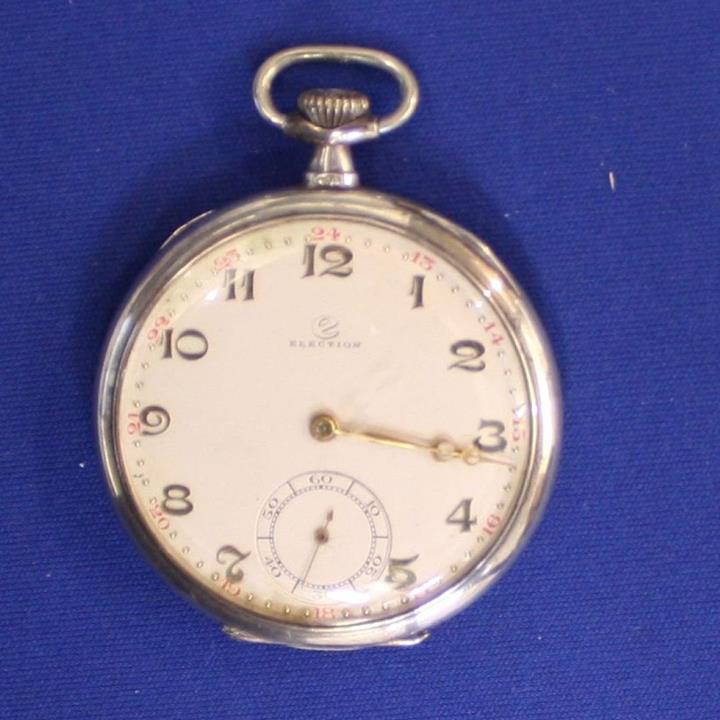
The Queen of Holland awarded a gold watch to Coxswain Henry George Blogg and Silver watches to the other members of the lifeboat in connection with the rescue of 15 persons from the wreck of the SS Georgia of Amsterdam in November 1927.
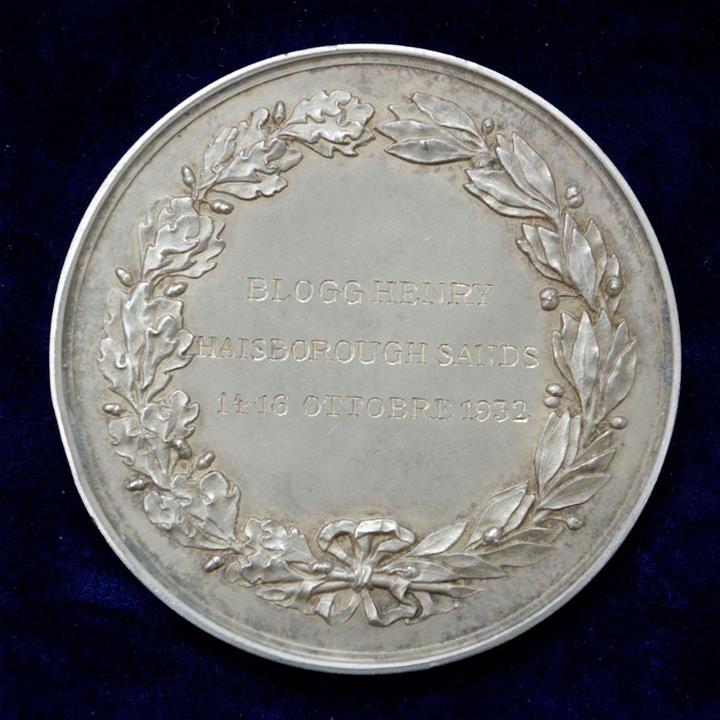
The Italian Government awarded a Silver medal and a diploma to Coxswain Blogg and Bronze medals and diploma to the other members of the lifeboat’s crew for the rescue of thirty men from the steamer Monte Nevosa of Genoa in October 1932.
The French Government awarded Coxswain Davies the French Maritime Cross and each of the other 11 members of the lifeboat crew with the life-saving medal for the rescue of 16 persons from the French collier Francois Tixier of Dunkirk in July 1948. The French Minister of Mercantile Marina also awarded a letter of thanks to the lifeboat crew.

Henry Blogg
The outstanding figure in the history of Cromer is Henry George Blogg who became a member of the Cromer crew in 1894 at the age of 18. He was coxswain from 1909-1947. During his 53 years as a lifeboat crew member, the Cromer lifeboats had been on service 387 times and rescued 873 lives.
Henry's record is without equal in the history of the Institution. No lifeboat crew member has received so many decorations for gallantry. He won the Gold Medal of the Institution, which is only given for conspicuous gallantry, three times. He won the Silver Medal four times. He also held the George Cross and the British Empire Medal.
Henry died in July 1954 at the age of 78 years. A bronze memorial plaque commemorating him was unveiled by Lord Templewood in the Cromer lifeboat house in August 1955. Coxswain Blogg’s portrait was painted for the Institution by Mr F C Dugdale RA and was exhibited in the Royal Academy Summer Exhibition in 1942, and now hangs in the offices of the Institution. A copy by Mr Dugdale was presented to Coxswain Blogg by the Institution.
1804
1857
1858
RNLI places its first lifeboat on service, a 10m Peake class boat, built at a cost of £176.
1867
Silver Medal awarded to the Hon Auberon Herbert in admiration of his gallant conduct when the lifeboat launched on service through heavy surf, with the view of rescuing the crew of the sloop Sutcliffe. The sloop was wrecked off Cromer in a gale on 26 July 1867.
1868
A new lifeboat house is constructed at a cost of £476.
A new 10m self-righting lifeboat, Benjamin Bond Cabbell, is built at a cost of £306 and placed on service. The previous boat is broken up.
1877
Tests are made each time the lifeboat is afloat. Half the oarsman wear waistcoat lifebelts, and the other half strap and buckle belts.
1884
A new 11m lifeboat, designed with input from Cromer personnel and therefore termed a 'Cromer' design, is built at a cost of £365 and placed on service in September. It is also named Benjamin Bond Cabbell ON12. The old boat is broken up.
1895
Gas laid on to lifeboat house.
1902
A new 11m Liverpool class lifeboat, Louisa Heartwell ON495, is built at a cost of £982 and placed on service in September.
A new boathouse is constructed to house the new lifeboat and carriage, costing £525.
1917
Gold Medal awarded to Coxswain Henry George Blogg, Silver Medals to William Davies and Private Stewart Holmes, and Bronze Medals awarded to Crew Members George Allen, James Allen, Edward Allen, William Allen, Henry Balls, Charles Cox, George Cox, Leslie Harrison, Tom Kirby, Gilbert Mayers, Walter Rix, and William Rix. This is in recognition of the seamanship, unwavering courage, tenacity and physical endurance displayed by them when the lifeboat went to the assistance of the Swedish steamer Fernebo after an explosion had broke the vessel in two in a strong north-easterly gale in the afternoon of 9 January 1917.
The lifeboat, only just returned from a service to the Greek vessel Pyrin, and with a crew undaunted by their previous exertions, tried to launched once more with the assistance of hundreds of servicemen, many up to their necks in the water, but it was impossible to get past the heavy surf and she was driven back onto the beach. Several more unsuccessful attempts were made to launch and rocket apparatus was also tried, but just before midnight the lifeboat was successfully launched and rescued 11 survivors.
The Committee of Management votes a grant of £100 to a soldier, Driver John Sharp, who became paralysed after assisting as a launcher on this service. He died as a result of his illness on 21 September 1918 and the grant of £100, which had been invested, is returned to the Institution.
This is the first time Bronze Medals are awarded.
Due to wartime demands, lifeboat crews at this time are almost all over military age, and more than one in this lifeboat crew is approaching 70 years of age.
1923
With the introduction of a motor lifeboat to Cromer, a new lifeboat house and slipway is constructed at the end of the pier at a cost of £32,000.
A new motorised Norfolk and Suffolk class lifeboat H F Bailey ON670, is built at a cost of £10,993 and placed on service. The Louisa Heartwell is retained as a No 2 boat.
Since 1923 there have been two lifeboats at Cromer, the larger for working on the outlying sands and the smaller for working inshore.
1924
Coxswain Blogg and six other Gold Medallists are awarded the Empire Gallantry Medal by HM The King in the RNLI’s Centenary Year.
A new motorised Waverley class lifeboat, also named H F Bailey ON694, is built at a cost of £7,580 and placed on service. The previous boat is transferred to Gorleston.
1927
Gold Medal Second Service Bar awarded to Coxswain Henry George Blogg; Bronze Medal Second Service Bars to crew members Edward Allen and Leslie Harrison, and Bronze Medals to George Balls, John James Davies (Senior), Robert Davies, William Thomas Davies, Richard J Baker, George Cox, Harry William Davies, James William Davies, John James Davies (Junior) and Sidney Charles Harrison. This is in recognition of the rescue of 15 men from the Dutch oil tanker Georgia, which had broken in two at 8.30pm on the South Haisborough Sands on 21/22 November 1927.
1928
A Centenary Vellum awarded.
A new motorised Waverley class lifeboat, named H F Bailey II ON714, is built at a cost of £8,470 and placed on service when the previous boat is sent away for overhaul.
1929
HF Bailey 11 ON714 is sent for overhaul, and HF Bailey ON694 is returned to station.
1931
Bronze Medal Second Service Bar awarded to Bowman John James Davies (Snr) for his service on 17 February to a capsized fishing boat, Welcome Home. He jumped overboard from the lifeboat to help a man who was helpless in the water. Sadly, the man died.
A Liverpool class lifeboat Alexandra ON514, previously on service at Hope Cove, replaces Louisa Heartwell as the station’s No 2 boat.
1932
Silver Medal awarded to Coxswain Henry George Blogg for the rescue of 30 men and a dog from the Italian steamer Monte Nevoso that ran aground on the Haisborough Sands on 14 October 1932.
Coxswain Blogg is also awarded the Silver Medal of the Canine Defence League.
1934
Silver Medal Second Service Bar awarded to Coxswain Henry George Blogg for the rescue of two men from the barge Sepoy, when she was flying distress flags and dragging her anchors on 13 December 1933. As the lifeboat was already at sea on another service, several unsuccessful attempts to launch the No 2 lifeboat were made. When Coxswain Blogg, returning to station, heard of the casualty he immediately made best speed to assist.
When he reached the vessel, he rounded her stern and came between the barge, with heavy seas breaking over her, and the shore, trying unsuccessfully to lay alongside the vessel’s rigging, her decks beneath the water. Coxswain Blogg then ran the lifeboat’s bow, on top of the bulwarks, abreast of the starboard rigging, and one of the exhausted, very cold men was seized by some of the crew and hauled aboard. This manoeuvre was repeated and the other man was saved.
1935
A new Waverley class lifeboat, also named H F Bailey ON777, is built at a cost of £7,308 and placed on service as the No 1 lifeboat.
1939
Silver Medal Third Service Bar awarded to Coxswain Henry George Blogg; Bronze Medal Third Service Bar to Second Coxswain John Davies (Snr); Bronze Medals Second Service Bar awarded to Mechanic Henry W Davies and Assistant Mechanic James W Davies. This is recognition of the rescue of 29 from the Greek steamer Mount Ida, wrecked on Ower Bank on 9/10 October 1939.
This is the first lifeboat medal to be awarded in the war of 1939-1945.
1941
Gold Medal Third Service Bar awarded to Coxswain Henry George Blogg, Silver Medal awarded to Second Coxswain John J Davies, and a Bronze Medal Third Service Bar to Mechanic Henry W Davies, for rescuing 88 lives from six steamers of a convoy which had been wrecked on the Haisborough Sands on 5 August 1941.
Coxswain Blogg is also awarded the BEM for this service. Also for this service, a Bronze Medal Third Service Bar is awarded to Second Coxswain Leslie James Harrison and a Bronze Medal awarded to Mechanic Harold V Linder for the rescue of eight from the SS Taara.
Shortly before the award of the BEM for this service, it is announced that the George Cross is to be substituted for the Empire Gallantry Medal awarded in 1924. Coxswain Blogg receives his George Cross in October.
Silver Medal Fourth Service Bar awarded to Coxswain Henry George Blogg, Bronze Medal Fourth Service Bar awarded to Second Coxswain John J Davies (Snr) and Mechanic Henry W Davies, Bronze Medal Third Service Bars awarded to Signalman Edward W Allen (posth) and Assistant Mechanic James W Davies. Bronze Medals Second Service Bars awarded to crew members Sidney C Harrison, John J Davies (Jnr), and Bowman William T Davies; and Bronze Medal awarded to Henry Thomas Davies, James Richard Davies, Robert C Davies and William H Davies. These awards are in recognition of the rescue of the crew from the English Trader wrecked on Hammond Knoll on 26 October 1941.
While on this service, five men, including Coxswain Blogg, were washed out of the lifeboat. All were recovered but Signalman Edward W Allen sadly died of heart failure later and his widow was granted a pension.
1945
A new Watson class lifeboat, Millie Walton ON840, built at a cost of £15,242 and previously on service at Douglas, Isle of Man, is placed on service in December. She is the first mid-ship steering type of lifeboat.
H F Bailey is transferred to Gorleston.
1946
The Millie Walton is renamed Henry Blogg after its namesake who had an unprecedented record of service for Cromer over 53 years and who finally retired in September 1947.
The naming ceremony is postponed until August 1948.
1964
A new Oakley class lifeboat, William Henry and Mary King ON980, is built at a cost of £33,000 and placed on service in October as the No 2 lifeboat, the Harriot Dixon is transferred to Great Yarmouth.
1967
A new Oakley class lifeboat, Ruby and Arthur Reed ON990, is built at a cost of £60,000 and placed on service in March. Henry Blogg is transferred to Gorleston in April 1966 for repairs and the No 2 lifeboat provides cover for the intervening period.
A D class IRB lifeboat D-101 sent to station in March and No 2 station closed on 22 June. William Henry and Mary King is transferred to Bridlington.
1970
D-101 transferred to Bembridge and replaced by D-26, previously on service at Walmer and Great Yarmouth and Gorleston.
1972
A new ILB D-197 is placed on service and D-26 is returned to the reserve fleet.
1973
1974
Bronze Medal awarded to Dr Paul Barclay MC TD, in recognition of his courage and devotion to duty in undertaking a hazardous transfer, although suffering from severe seasickness, from the lifeboat to the trawler Boston Jaguar to treat an injured man on 15 November 1973.
The Thanks of the Institution Inscribed on Vellum awarded to Coxswain H T Davies BEM, in recognition of his skill and determination in successfully transferring Dr Barclay and crew member R W Davies to the trawler.
The Thanks of the Institution Inscribed on Vellum also accorded to Crew Member R W Davies in recognition of his meritorious action in undertaking the hazardous transfer in support of Dr Barclay.
1975
A celebration Vellum presented to station to commemorate 171 years' service.
1981
Bronze Medal awarded to Helmsman Clive Richard Rayment in recognition of his courage and seamanship when the D class inflatable lifeboat rescued the crew of two of the fishing boat George William, which sank off East Runton in a strong north-north-easterly wind and a rough onshore sea and swell on 1 May 1981. One man was clinging to a lifebuoy and the other to a crab pot marker buoy. The lifeboat was driven at maximum speed despite the heavy onshore swell to quickly reach the two men, who were both suffering from hypothermia.
Medal service certificates presented to the two crew members of the lifeboat, Frank H Muirhead and Christopher B Craske.
1984
A new ILB boathouse is constructed and a new D class lifeboat D-307 Spirit of Round Table placed on service. D-197 is transferred to the reserve fleet.
1985
The new station Tyne class lifeboat ON1097 Ruby & Arthur Reed II placed on service on 16 December. Ruby and Arthur Reed had left for a refit in September 1984 and the relief fleet Watson class lifeboat Guy and Clair Hunter ON926 had provided cover over the intervening period.
1989
The Thanks of the Institution Inscribed on Vellum is awarded to Coxswain Richard Davies for towing to safety the yacht Phaedra and saving the lives of her crew of two on 29 September 1988. The casualty was 33 miles from Cromer and sailing around in circles in the middle of the night in a west-south-west force 8/9 gale gusting to force 10, as well as 6m seas. Severe weather conditions prevented a crew member being placed on board the casualty to secure a tow, but the skipper of the yacht managed to haul down the sails and make fast a tow. This service lasted 12 hours in the worst conditions experienced by the crew since the Tyne class lifeboat Ruby and Arthur Reed II was stationed at Cromer in 1985.
1991
A collective Framed Letter of Thanks signed by the Chairman of the Institution is presented to Coxswain R W Davies, Second Coxswain W T Davies, Mechanic R J Hannah, Assistant Mechanic J W H Jonas and Crew Members P Jefferies, P Everitt, H Balls and J Howard. This is recognition of a service on 21 November 1990 to the cargo vessel Stavroula that had gone aground on the Mid Haisbro Sand with nine crew on board. In an east-north-easterly force 6 strong breeze and a very rough sea, lifeboat Ruby and Arthur Reed II was manoeuvred alongside the vessel and the crew were taken off. Seven of the crew were landed ashore by helicopter. The master and engineer, with two lifeboat crew members, re-boarded the vessel to assess the situation. A small fire was found in the galley and extinguished, and the rudder was found to be jammed. At 10pm the vessel re-floated and a towline was passed to the tug Anglian Warrior, which had arrived on scene. The two lifeboat crew members returned to the lifeboat and the vessel was towed to Lowestoft.
1992
A new D class ILB D-436 Chloe is placed on service, and D-307 Spirit of Round Table is retired to the relief fleet.
1994
Bronze Medal awarded to Coxswain Richard William Davies in recognition of his courage, leadership and outstanding seamanship when on the afternoon of the 13 October 1993, the Ruby and Arthur Reed II lifeboat rescued the crew of five and saved the yacht Happy Bear, which had suffered steering failure off Cromer in storm force winds and 10m seas. Heavy seas were lashing the boathouse doors as the lifeboat launched down the slipway and, on reaching the water, she was completely buried in the sea. The launch of the lifeboat was the roughest that the station had experienced in the 30 years that the coxswain had been involved.
1996
During the construction of the new boathouse the old one is out of service, so Ruby and Arthur Reed II is retired to the relief fleet and replaced by the beach launched Mersey class Her Majesty the Queen ON1189, which is transferred from the relief fleet.
1998
A new ALB boathouse and slipway is completed in October.
The Thanks of the Institution Inscribed on Vellum accorded to Second Coxswain William Davies of the Cromer relief lifeboat ON1189 Her Majesty The Queen, in recognition of the high standard of seamanship and considerable initiative displayed by him when saving the crew of three and the yacht Tange of Whitby during an 11-hour service in severe weather conditions on 6 November 1998.
Vellum Service Certificates are also awarded to the seven crew: John Jonas, Gary Humphrey, John Davies, John Balls, Adrian Woods, Paul Jeffries and Giovanni Vanzino.
1999
The Thanks of the Institution Inscribed on Vellum accorded to Coxswain Richard Davies for entering the sea from the beach and swimming to the aid of a man being swept away by tidal streams on the night of 2 October. He caught hold of the man and supported him until both were recovered by the inshore lifeboat.
For this service, the crew of the inshore lifeboat receive Vellum Service Certificates.
On completion of the new boathouse, Ruby and Arthur Reed II returns to Cromer having had a refit while on relief fleet duty. Her Majesty the Queen returns to the relief fleet.
2001
A new D class ILB D-568 Seahorse III is placed on service in June. D-436 is retired to the relief fleet.
2003
The Trustees of the Institution vote that Cromer lifeboat station be awarded a Vellum to commemorate its bi-centenary in 2003.
2006
Adaptation of old museum for inshore lifeboat is completed in March.
A Mersey class lifeboat from the relief fleet, Royal Shipwright ON1162, is placed on service and ON 1097 is retired to the relief fleet.
2007
Building adaptations to accommodate Tamar class lifeboat are completed in November at a cost of £995,000.
2008
The new Tamar class lifeboat ON1287 Lester is placed on service on 6 January. It is funded by the generous bequest of Mr Derek Clifton Lethern, together with other bequests and gifts. Lifeboat ON1162 is withdrawn.
2011
A new IB1 D class lifeboat D-734 George and Muriel is placed on service and D-568 is retired to the relief fleet.