

Why does the RNLI launch to small boats in the English Channel?
When RNLI lifeboat crews are tasked by HM Coastguard to people in danger of drowning, they will answer the call. Any time of day or night, without judgement or preference.
This is what they have done for over 200 years. The men, women and children who find themselves in distress and sinking in one of the world's busiest shipping lanes are no exception. Our crews will go to their aid today when tasked, just like generations of lifeboat crews have done before them, in wartime and peace.
The RNLI launches lifeboats to small boats in the English Channel when HM Coastguard reports that people may be in danger at sea. International maritime law outlines that any vessel that becomes aware of people in distress at sea, must take all reasonable measures to assist. All small boats crossing the Channel are classed as being in distress.The RNLI is one of several declared search and rescue capability providers and, under long-established procedures, RNLI volunteer crews respond to anyone at risk of drowning, regardless of who they are or how they came to be in difficulty.
‘One thing I would like people to understand is that these people genuinely need our help,’ says Dan Sinclair, a volunteer helm at Walmer Lifeboat Station. He recalls a rescue in the Channel that will stay with him forever: ‘We launched to an overcrowded, unseaworthy small boat that was taking on water. One particular family was so scared. They were screaming. Their boat was sinking in front of their eyes. It was a horrible, horrible situation.’
The RNLI is a charity with one purpose: To save lives at sea. In 2025, volunteer lifeboat crew members like Dan launched to the rescue 9,058 times across the UK and Ireland. Just 109 (1.2%) of these launches were to small boats in the Channel.
One rescue remains on Dan's mind. ‘We managed to rescue that family. We stopped them from drowning. There was a little girl on the boat. She looked me straight in the eye and said: “I love you, thank you.” As a father, that went straight to my heart.'
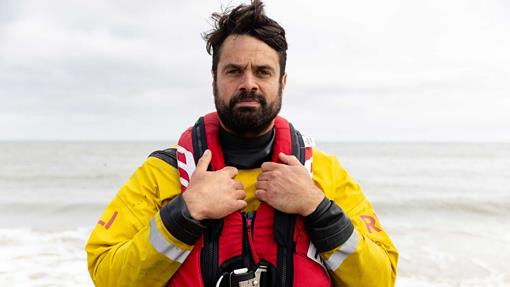
'There was a little girl on the boat. She looked me straight in the eye and said: “I love you, thank you.” As a father, that went straight to my heart.'
‘That rescue cemented in my head that what we are doing as an organisation is exactly the right thing,’ Dan says. ‘It’s true to the vision set by our founder over 200 years ago.’ The RNLI was founded by Sir William Hillary in 1824. Moved by the shipwrecks he witnessed on our shores, he made an appeal to the nation.
Hillary described his vision for an institution made up of a large group of people ‘in constant readiness to risk their own lives for the preservation of those whom they have never known or seen, perhaps of another nation, merely because they are fellow creatures in extreme peril.'
The facts behind our Channel rescues

109 (1.2%) rnli launches to small boats in the channel (2025)

94.3% percentage of people crossing the channel in small boats aided by other agencies such as border force
Why are the RNLI involved?
People often ask: ‘Why is the RNLI a taxi service for illegal migrants?’. The answer is that we are not. HM Coastguard coordinates maritime search and rescue operations around the UK. Our lifeboat crews are tasked to assist people who are in difficulty, both in the Channel and around the coast of the UK.
Anyone can drown. No one should. RNLI crews launch to the rescue, doing everything they can to save lives, without any thought to where the people they rescue are travelling from, nor their migrant status. Our lifeboat volunteers treat casualties with skill, care, and respect. They then pass over responsibility for the casualties to the most appropriate agency – this could be the ambulance service, police or UK Border Force.
Of the 41,472 people who were recorded to have crossed the Channel in small boats during 2025, 94.3% were aided by other agencies such as Border Force. Just 5.7% were rescued by the RNLI.
Tragically, lives have been lost by those attempting to cross the Channel, highlighting just how perilous this activity can be. The tragic events of 24 November 2021, when at least 30 people drowned in the Channel, were the subject of The Cranston Inquiry.
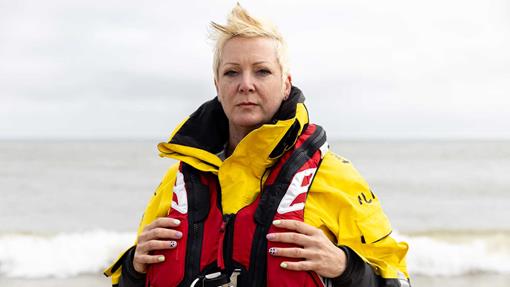
I looked into his face and his eyes were wide, his face was grey. He was so scared. I just knew that if I let him go, he wouldn’t be there.
Incredibly challenging rescues
When our crews respond to call outs to small boats in the Channel, they are responding to people in danger onboard unseaworthy, dangerously overcrowded boats. Many will not be wearing buoyancy aids or lifejackets, and many of the casualties are also unable to swim. Add to that the location – one of the world’s busiest shipping lanes – and you have a situation that can become very dangerous, very fast.
‘In 2023, I was involved in a double mass casualty rescue,’ recalls Paula Lain, volunteer lifeboat crew member at Dover. ‘We were rescuing a small boat. We then had a mayday to return to a scene to help rescue a boat that had capsized. When I arrived on scene, it was a shock. There were people in the water, some disappearing under the water. It was at that moment that we all took stock.
‘There was this man holding onto the edge of the boat. He had no strength left. I leant over, lay on my front and I grabbed his arms, and he had no strength to hold me. I looked into his face and his eyes were wide, his face was grey. He was so scared. I just knew that if I let him go, he wouldn’t be there. I also knew that there was absolutely no way I was going to let him go. I held onto him and I called for help from my colleagues, and together we pulled him to safety.’
Lifeboat crews don’t pick who they rescue. They will answer the call for help whenever it comes. Whatever the situation, they will always do what they can to save every one they can.
Because we are the charity that saves lives at sea. This is the RNLI’s lifesaving purpose. As it was in 1824 and continued today by the brave lifesavers of the RNLI.
Frequently Asked Question on the RNLI's Channel work
Find more answers to questions on the RNLI's work in the English Channel using the FAQ links below:
Our crews are tasked and coordinated in the UK by HM Coastguard to assist anyone who is in trouble on the water and will go to the aid of those crossing one of the world’s busiest shipping lanes in small, overcrowded and unseaworthy boats. This is an extremely demanding search and rescue environment in which our volunteer crews are often confronted with highly challenging rescue scenarios, involving large numbers of distressed men, women and children in the water. We are incredibly proud of our crews who continue to respond selflessly to their pagers, day or night, simply to help others. They have responded with continued dedication and commitment. We are a voluntary lifesaving rescue service, and will rescue anyone in trouble at sea, as the RNLI has been doing for more than 200 years, without judgement or preference.
The RNLI is one of HM Coastguard’s declared search and rescue assets around the UK and is tasked by them for the purposes of saving lives at sea. RNLI crews in south-east England rescue those crossing one of the world’s busiest shipping lanes in small, overcrowded and unseaworthy boats. Our crews launched 109 times to small boats crossings in 2025 which equates to 1.2% of the total number of launches for the entire RNLI. During those Channel shouts our volunteer crews rescued 2,353 people.
Of the 41,472 people who were recorded to have crossed the Channel in small boats during 2025, 2,353 people were rescued by the RNLI. This equates to 5.7% of the total number of people, with the rest being aided by other agencies such as Border Force.
RNLI launches to suspected Channel crossings decreased in 2025, however, all agencies involved in this work have seen larger, more overcrowded and unseaworthy boats being used in these crossings. Combined with poor structural integrity and people taking higher risks in worse weather conditions, this has led to more people finding themselves in danger at sea and needing rescue by the RNLI and other agencies.
Anyone can drown but no one should. The RNLI will help those in trouble in the water – no matter who they are or where they come from. The RNLI's volunteer lifeboat crews will do everything in their power to save a life and to help those in distress. In any rescue, our priority is to ensure that casualties are treated with skill, care and respect and brought to safety as quickly as possible. Our crews then pass over responsibility for them to the most appropriate agency – this might be the ambulance service, police or Border Force.
We respond to call outs in the Channel when tasked by HM Coastguard to help those in distress. The RNLI will help anyone in trouble at sea and does not judge those it rescues. Our core purpose remains to save lives at sea.
If someone is in trouble at sea and we are tasked by HM Coastguard, we will launch to help them – no matter who they are or where they come from, as we have been doing for more than 200 years. We are incredibly proud of our crews who continue to respond selflessly to their pagers, day or night, simply to help others. They have responded in extremely demanding search and rescue environments with continued dedication and commitment. Everyone at the RNLI remains focused on our core purpose of saving lives at sea.
In recent years, there has been a high level of taskings to men, women and children attempting to make the dangerous crossing of the Channel in small, overcrowded and unseaworthy boats. We understand the demand this places on our volunteers, staff, their families and employers and we thank them for their understanding, support and continued effort to save lives at sea. The welfare of our volunteers and staff will always be a top priority and, as with all aspects of the RNLI’s lifesaving service, we continue to look at ways in which we can improve how we best support them. We are incredibly proud of our lifeboat crews throughout the UK and Ireland who answer their pagers 24/7, 365 days a year to help others.
No. The RNLI is one of a number of HM Coastguard’s declared list of search assets around the UK for the purposes of saving lives at sea and is tasked by them as necessary. HM Coastguard is responsible for initiation and coordination of all maritime search and rescue within the UK Maritime Search and Rescue Region and actively manage multiple distress scenarios, tasking the RNLI depending on the immediate needs at the time.
It is not for us to question whether people have the right to be in the UK - that is a question for Government. Our core purpose as a charity has always been to save lives at sea and this remains our focus.
We do not hold information on costs per rescue, as these can vary widely and are dependent on a number of factors, including the length and type of shout, the class of lifeboat and the amount of fuel used.
The RNLI’s volunteer crews are tasked and coordinated in the UK by HM Coastguard to assist anyone who is in trouble on or in the water. If someone is in trouble at sea, and we are tasked, we will launch to help them. Our lifeboats operate under international maritime law, which states we are permitted and indeed obligated to enter the waters of other territories for search and rescue purposes.
Our crews are tasked and coordinated in the UK by HM Coastguard to assist anyone who is in trouble on or in the water. In any rescue, our priority is to ensure that casualties are treated with skill, care and respect and brought to safety as quickly as possible. The decision on the most suitable place of safety is made in consultation with HM Coastguard and this can be the crew’s home lifeboat station, or a designated safe landing site determined by HM Coastguard. HM Coastguard’s preferred location for safely transferring people who have crossed the Channel is the Port of Dover. Our crews then pass over responsibility for casualties to the most appropriate agency – this might be the ambulance service, HM Coastguard response teams, police or Border Force. The lifeboat is then recovered by the shore crew and readied for the next service call.
No. The RNLI is a charity, funded by generous supporters. Their kind donations power our lifesavers to the aid of those in danger at sea.
The RNLI does not seek funding from central government, to ensure that we retain independence in all that we do to save lives at sea. However, there are exceptions made where such independence is not compromised. We received some funding through the Covid furlough scheme and occasionally receive grants for specific international projects.
The RNLI provide a lifeguard service for local authorities and landowners at their request. Local authorities and landowners invest in keeping their beach visitors safe by contributing to RNLI costs, which helps to meet lifeguard wages, while the extensive training and equipment needed is provided by the charity through public donations.
The RNLI exists to save lives at sea. The charity has evolved for more than 200 years to meet the needs of its volunteers, staff, supporters, and the communities it serves. Whether that be with the introduction of lifeguards to meet the changing ways our coastline is used, the introduction of lifeboats on the Thames in 2002 in response to the Marchioness Disaster, the introduction of educational programmes to raise awareness of water safety or the continuing development of lifesaving assets to best serve the evolving communities and lifesaving demands in the locations which we serve, in order to save lives at sea. We regularly review risk and changing use of our coastlines allowing us to allocate resources where and when it is needed and when doing this, we always consider the best use of our donor's money.